
Essential SEO Trends That Still Matter Today
According to Ahrefs research, over 90% of pages on the internet get no organic traffic from Google, while the top-ranked pages earn the majority of all search traffic. To ensure your website isn’t left behind, you need to embrace proven SEO strategies.
In this article, we outline eight essential SEO trends that continue to shape successful website marketing.
Importance of SEO Trends
Monitoring and adapting to SEO trends is essential for every organization, brand, and marketer using the internet. Although the impact of each trend will depend on your organization, goals, and website, embracing proven SEO strategies will help you to:
-
Increase your organic traffic and sales conversions.
There are two primary forms of website traffic: paid traffic and organic traffic. Paid traffic comes to your websites due to advertising, while organic traffic finds your website through a search engine.
While paid traffic is easier to bring in, conversion rates from organic traffic are significantly higher than paid traffic. Long term, prioritizing organic traffic will save you money while bringing you more customers.
-
Stay ahead of your competition and grow your market share.
Grow your market share by embracing SEO trends, and you’ll stay ahead of your competition. The number #1 position on Google attracts the most traffic, as 31.73% of traffic clicks on the first link. If you can earn that position in common searches in your business niche, you’ll be able to gain more customers than your competition.
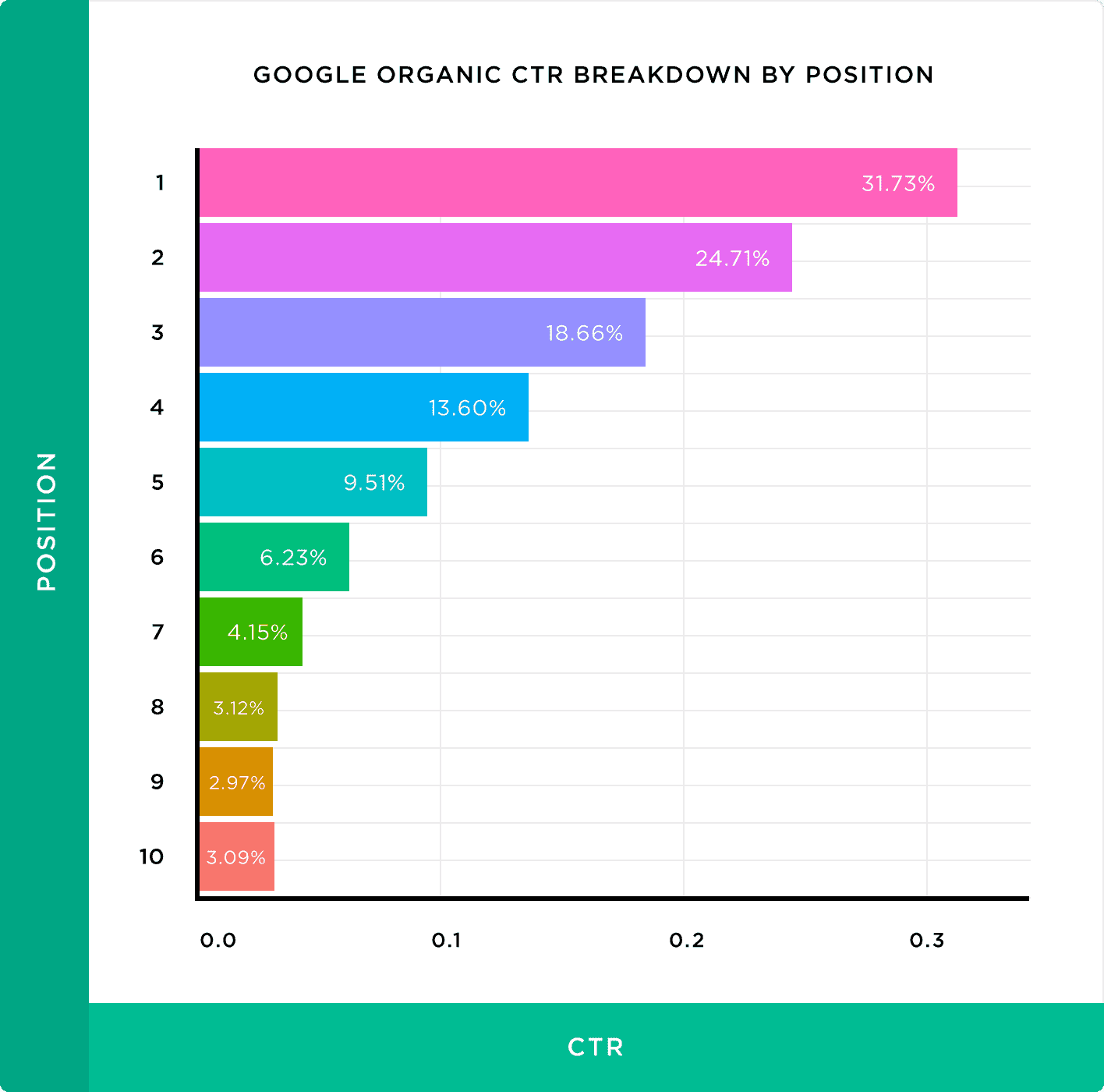 Image via Backlinko
Long term, keeping your business on the first page of Google will also grow your market share. Market share is a portion of the market controlled by your company. The business with the dominant share of the market enjoys unique benefits, as they are seen as industry leaders, earn news coverage, and become the “go-to” option for new customers.
-
Maximize your marketing mileage.
Embracing new SEO trends will keep your content popular, helping you get more mileage out of your marketing. While you can only use advertising campaigns once, website content can be reused for years as long as the information it contains remains accurate.
Updating old content on your website can significantly increase your organic traffic. SEO best practices also allow you to improve evergreen content, which doesn’t go out of date.
Understanding the benefits of embracing SEO best practices, let’s explore key strategies that continue to drive results.
SEO Trends and Strategies to Succeed
As the art of SEO evolves, staying up to date on proven strategies is essential for every marketer and every organization. While it may seem essential to embrace SEO trends specific to a single search engine, most SEO best practices apply to multiple search engines, as they use similar algorithms to deliver search results.
Google remains the dominant search engine, accounting for the vast majority of search traffic globally. Here are eight essential SEO strategies that continue to drive results.
#1. The Growth of AI in SEO
Search engine algorithms use AI (artificial intelligence) more than ever before. While companies like Google are secretive about the role of AI in search engines, we know that AI is being used for three things:
- Content sorting. AI helps search engines sort through website content, pushing the high-quality content to the top of the search results and leaving the low-quality content on page 12.
- Ranking search results. AI is being used to rank search results, gathering data about each result, and adjusting its position accordingly.
- Understanding language. AI is now being used for Natural Language Processing (NLP). NLP works to interpret the nuances in human language, helping search engines decide the intent and purpose of website content.
To embrace and adjust your SEO strategy around the changes brought by AI-based search engines, experts recommend using SEO services to craft content that will appeal to both readers and search engine algorithms. This content should feature keywords evenly distributed throughout the article, as well as high-quality backlinks that help search algorithms understand your content and its purpose.
#2. Voice-Powered Search Queries
Voice-powered search queries are searches that are made after someone verbally asks their smartphone, tablet, smart speaker, or computer to search for them. Voice-powered searches can currently be conducted through technology like Siri, Cortana, Amazon Alexa, and Google Assistant.
Optimizing your website for voice-powered searches is increasingly important, as a significant portion of the global online population uses voice search on their smartphones, making voice-search a critical source for organic website traffic.
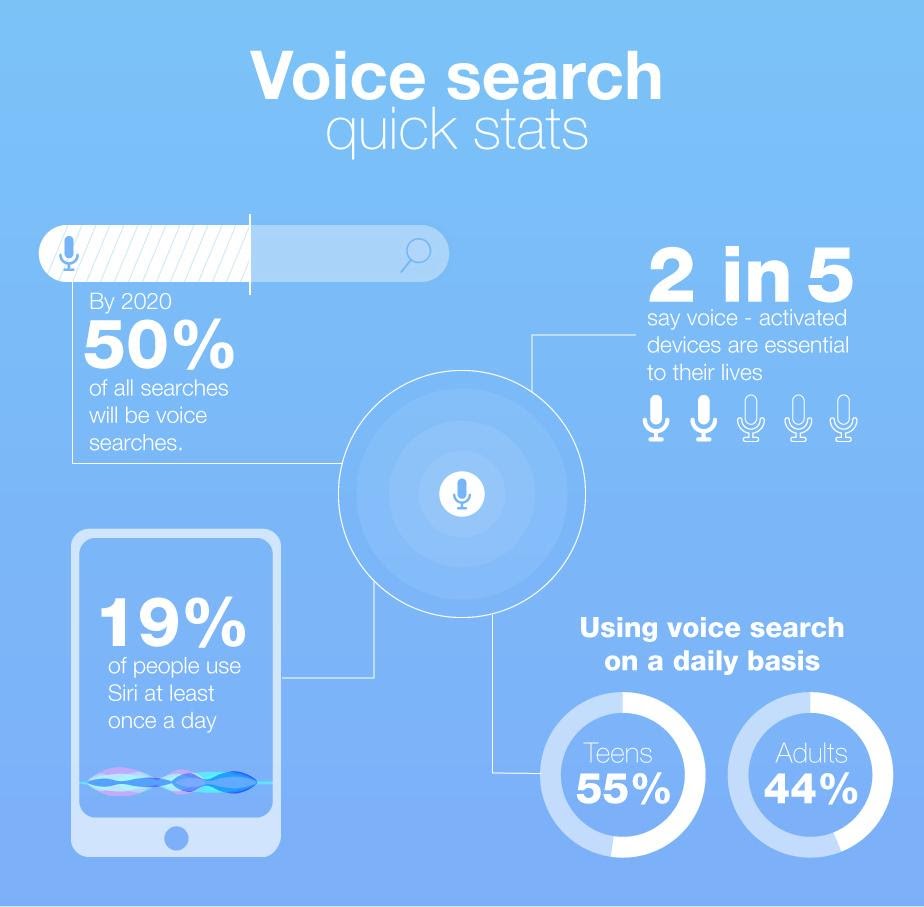 Image via bluecorona
To embrace the trend of voice-powered search queries, try these four SEO tips.
- Start paragraphs in your blog articles with questions, and begin questions with words like “what,” “when,” “how,” “who,” and “why.”
- Use neutral-sounding language that translates into other languages easily.
- Provide concise answers to questions.
- Use featured snippets for summarizing content on each webpage.
To make the best website optimizations, it’s also essential to understand where your website traffic is coming from, whether it’s mobile, voice-powered search, tablet, or desktop. To track this information automatically, use marketing automation software, and monitor voice-powered search traffic.
#3. Google EAT Principle Will Dominate Content
Google’s EAT principle is a principle the search engine uses to assess each website’s expertise, authority, and trust. These factors include your EAT score, which impacts your ranking in search engine results.
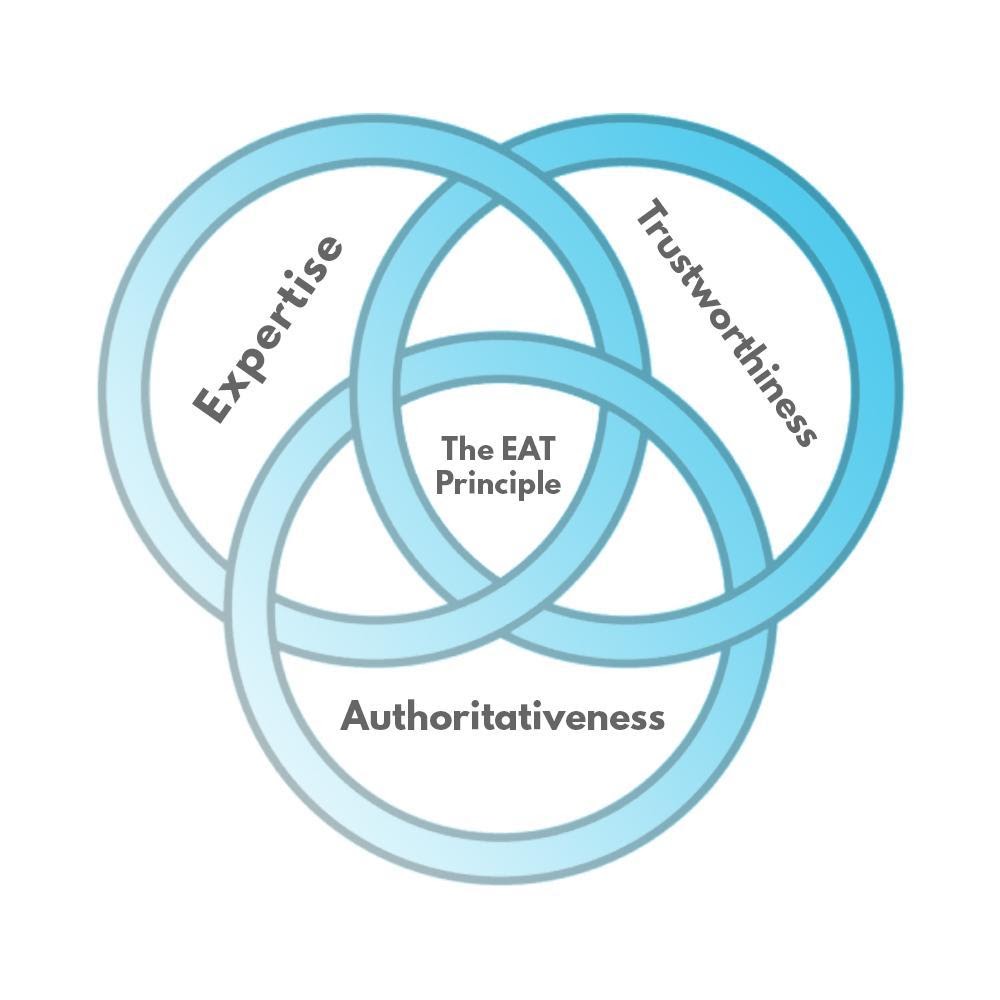 Image via theshiftmarketing
A page with a high EAT score will include good-quality content, a descriptive title, satisfying information about who owns the website, and a positive website reputation. Websites with a low EAT score feature no sources, cover topics outside their expertise, and do not clarify who owns the website.
To embrace the EAT principle:
- Ensure your website has an active SSL certificate.
- Avoid misconstruing topics or publishing content with bias (i.e., giving medical advice).
- Link to credible sites with controlled domains like ‘.edu’ and ‘.gov’.
- Link the sources on all statistics, quotes, and images you use to avoid breaching someone else’s copyright.
Improving your on-page SEO is another great way to increase your EAT score. Here are six on-page SEO tips to get you started:
- Break up large chunks of text into small, easy-to-read paragraphs.
- Use short sentences where possible.
- Use bullet points and numbered lists.
- Use header tags like H2, H3, and H4.
- Use SEO copywriting, which means crafting high-quality, engaging content around specific keywords to appeal to both readers and the search algorithms.
- Use URLs in the correct format: ‘www.domain.com/separate-words-like-this,’ rather than ‘www.domain.com/separatewords,’ or ‘www.domain.com/separate_words_’.
#4. Mobile Friendliness Will Influence Rankings
Mobile-friendly websites use an interface that shrinks to the size of a mobile screen, allowing customers to use your website as effectively as they would on their computer.
The majority of the global population now has mobile connectivity. Mobile-friendly websites don’t just attract more clicks; search engine algorithms heavily favor them. The majority of internet users access the web on mobile devices, and search engines want to meet this digital generation’s needs.
To embrace the trend of mobile-friendliness, make sure you:
- Use a mobile-friendly website theme.
- Use a mobile rank tracker to analyze keyword positions.
- Use Accelerated Mobile Pages (AMP) to increase the speed of your website on mobile.
- Consider creating a simple mobile app that provides ordering, payment, and product information for repeat customers on mobile and tablet devices.
When designing a mobile-friendly website, it’s essential to use every tool you can to ensure you meet your customers’ needs. After implementing a mobile-friendly theme, always test your website’s performance on Google’s mobile usability report.
Then, it’s essential to gain feedback directly from your customers themselves. To ensure you deliver a great customer experience on mobile, ask customers to fill out a simple customer service survey.
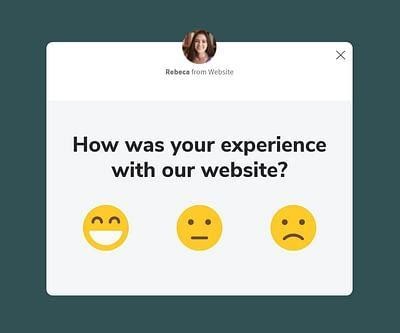 Image via VoIP
#5. Image and Video Optimization
With widespread 5G network availability, optimizing images and videos is an essential part of SEO. Faster mobile networks mean customers can load more images and video content faster.
Video content leads to significantly more conversions than text-based content alone, and this trend continues to grow. Statistics from Google show that video content is essential for product-based businesses, as most people switch between video and online search when shopping.
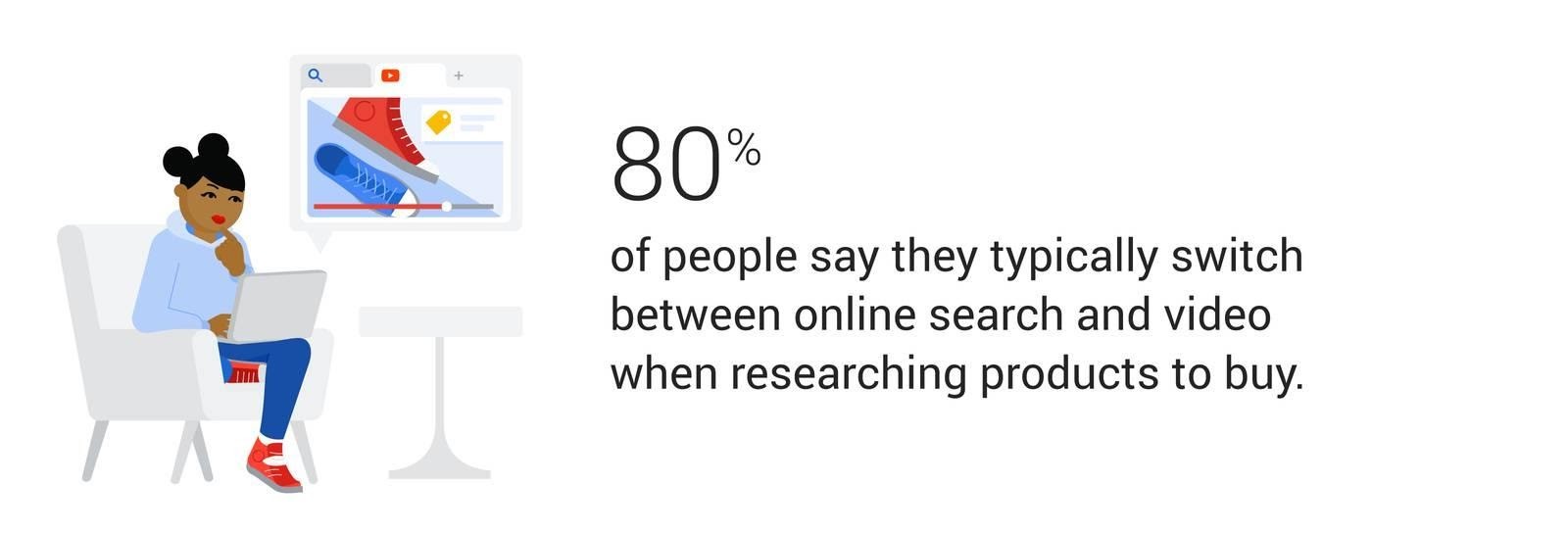 Image via Google
To adapt to this marketing landscape, you’ll need to optimize your website’s rich media. Rich media includes animations, gifs, infographics, webinars, live streams, and podcasts, with images and videos being the most impactful. To get the most of this media, always ensure you:
- Add alt tags.
- Tag all media with relevant keywords, so they appear in search results (i.e., ‘red hat’).
- Label the file to describe the media (i.e., ‘red hat with smiley face’).
- Optimize the size of the video or image to suit your website’s theme.
- Use a plugin to compress your media’s size so it doesn’t impact page load time.
Although optimizing the images and videos on your website may sound tricky, there is plenty of software available online to help. As internet-pioneer Mitch Kapor said: “Getting information off the internet is like taking a drink from a fire hydrant.”
To create high-quality images, try graphic design software. If you don’t have a film degree but want to make videos, use video templates.
#6. Related Keyword Priorities Will Change
While search engines function incredibly efficiently with known searches, a significant portion of searches have never been searched before. To address this, algorithms favor long-tail keywords and semantic searches.
Long-tail keywords are longer and more specific, usually 3 - 6 words long (i.e., ‘Chinese Food London CBD’ instead of ‘Chinese Food’). Long-tail keywords currently account for 50% of all web traffic and have a 3 - 5% higher click-through rate than shorter keywords. This is because they provide search engines with two essential things: context and intent.
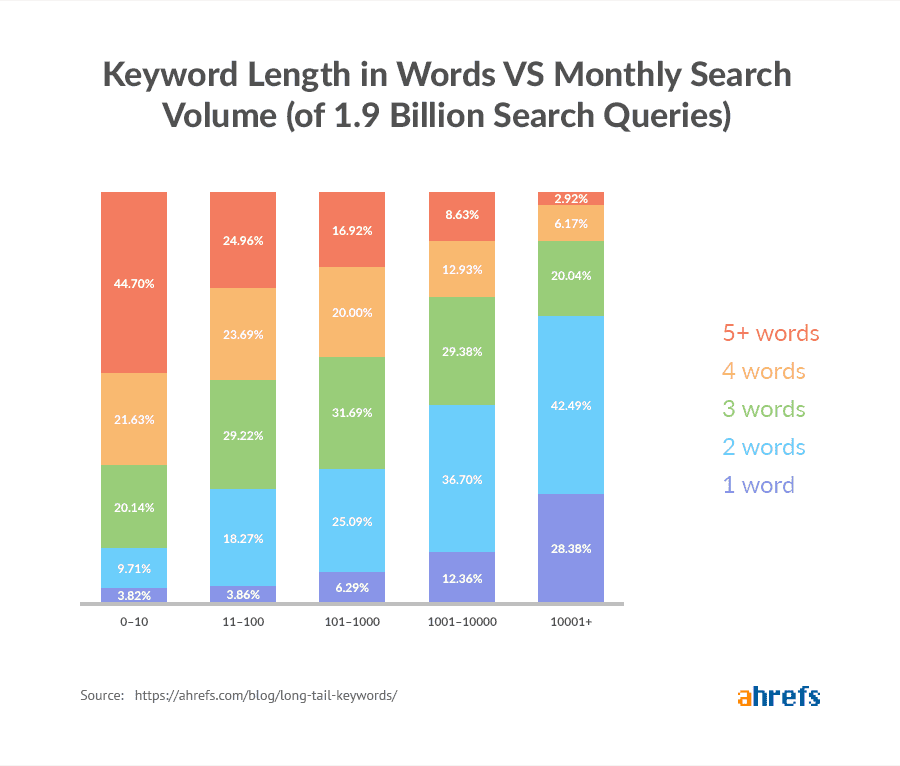 Image via Ahrefs
Naturally, this brings us to semantic searches. Semantic search is a strategy used by algorithms to infer the intent and context of each search. Semantic search is designed to return content that meets the user’s exact needs without a repeat search.
For example, an algorithm using semantic search would infer from a search for ‘Pad Thai Portland’ that the searcher wants to find local restaurants, so returns local restaurants over news stories, reviews, and recipes for Portland-style Pad Thai.
To adjust to the world of keywords, you’ll need to make some small tweaks around your website. This includes:
- Using keyword tools before writing website content.
- Favoring long-tail keywords over short term keywords.
- Using multiple LSI (latent semantic indexing) keywords to help algorithms understand who your content is for.
- Using data from link trackers to create content that meets the exact needs of your desired audience.
- Keeping your website content specific to draw in the right traffic.
#7. Local SEO Will Be Crucial
Local SEO is a type of search engine optimization that aims to get your website in the search results for a specific geographic area. This includes searches like “Chinese food Houston” or “dry cleaner Singapore.”
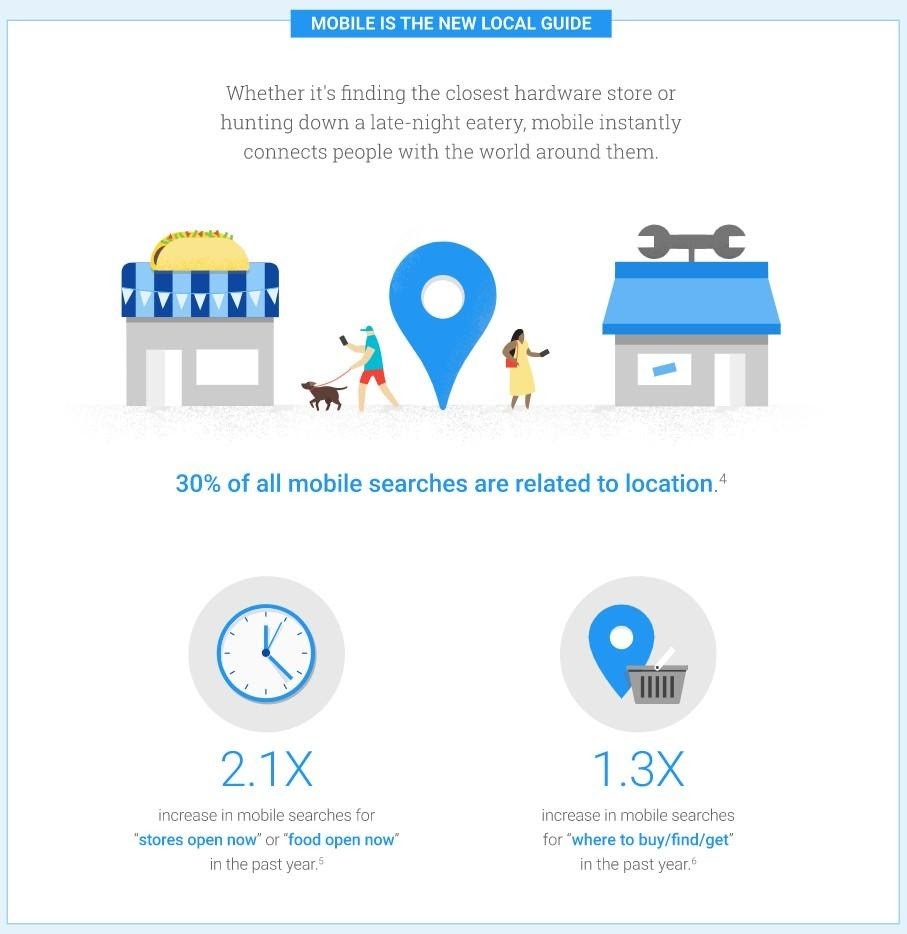 Image via Google
Local SEO is important for search engine algorithms, as a large percentage of Google searches feature local intent. The vast majority of internet users have searched for local businesses in their area, with many of these being mobile searches.
To embrace local SEO, you’ll need to structure your website with content specific to local customers. This means providing readers with information like:
- Advertising is based on your location, like “Amsterdam’s best coffee.”
- Details about what makes your brand unique to your local area and how you contribute to your local community (i.e., list your awards and charity affiliations).
- Your opening hours, shipping times, and customer service hours.
- Pricing in your local currency and guarantees that adhere to local consumer laws (i.e., warranty, exchange policy, money-back-guarantees).
Tip!
If you don’t have time to design an entire website from scratch, try a proposal-based WordPress theme.
When embracing local SEO, don’t forget to incentivize customers to leave online reviews as social proof. The average new customer spends 13 minutes and 45 seconds reading reviews and reads an average of 10 reviews before making a purchasing decision.
#8. Data and Analytics Will Shape Success
Search engine algorithms use data and analytics to assess websites. This includes:
- Your domain authority.
- Your click-through-rate.
- The number of new visitors.
- The number of returning visitors.
- The number of visitors on your website.
- The average number of page views per visit.
- The average amount of time spent on your page.
- Top landing pages.
- Top exit pages.
- Your bounce rate.
This information is then used to assess how trustworthy, useful, and reliable your website is to readers. The more favorable the result, the higher your ranking - but there’s a catch. Simply drawing in more visitors isn’t going to increase your ranking. Instead, algorithms favor websites where internet users spend more time, engage with more, and return to repeatedly.
To increase your SEO, you’ll need to optimize your website’s user experience by tracking your website metrics. This data will then need to be used to improve low-performing pages, improving your website and your search ranking in one go.
Stay Ahead of Your SEO
To truly embrace these SEO strategies, abandon the hard sell and make your website readers the primary focus of all your content. As we can see from the strategies above, search engines favor content made for humans, by humans. Your website isn’t made for robots - don’t market it like one!
About the Author
Mark Quadros is a SaaS content marketer that helps brands create and distribute rad content. On a similar note, Mark loves content and contributes to several authoritative blogs like HubSpot Sales, CoSchedule, Foundr, etc. Connect with him via LinkedIn.
Twitter: https://twitter.com/_markquadros | Gravatar: workwithmarkquadros@gmail.com | Website: www.dherealmark.som