Best AI Search Monitoring Tools for Marketers in 2026
I’ve spent years obsessing over keyword rankings, watching my articles climb to that sweet number one spot on Google. And you know what? It mattered. Traffic rolled in. Leads converted. Life was good.
But people aren’t Googling the way they used to. They’re asking ChatGPT. They’re using Perplexity for research. They’re trusting Google’s AI Overviews more than the actual search results below it. And if you’re like me, you’ve probably had that sinking feeling when you realized: your brand isn’t showing up in any of these AI-generated answers.
That’s where AI search monitoring tools come in. They help you track your brand visibility across ChatGPT, Perplexity, Google AI Overviews, and the rest of AI search, just as traditional SEO tools tracked your Google rankings.
This guide walks you through the five best options I’ve found. Some are affordable and simple. Others are enterprise-grade. But they all solve the same problem: helping you see (and improve) your presence where buying decisions are actually happening in 2026.
Let’s get into it.
What Are AI Search Monitoring Tools and Why They Matter
AI search monitoring tools help you track how your brand appears inside AI-powered search engines. Unlike traditional SEO, which focuses on keywords, backlinks, and search volume, AI search visibility revolves around how Large Language Models describe you, whether they cite your content, and how often you appear across platforms like ChatGPT, Perplexity, Gemini, Claude, and Google AI Overviews.
If traditional SEO tools told you where you ranked, AI search monitoring tells you whether you exist at all in AI-generated responses.
I’ve seen companies with strong traditional SEO presence get completely shut out of these responses. Their organic traffic looked fine in Search Console, but they were invisible in the channels where their actual buyers were making decisions. That gap between traditional search visibility and AI search visibility is what these tools help you identify and fix.
Here’s why this matters more than you might think.
- AI search is becoming the default search engine: With Perplexity crossing 100M monthly visits and Google pushing AI Overviews into mainstream search behavior, users increasingly expect conversational answers, not blue links. If you’re not visible here, you’re invisible to a growing chunk of your audience.
- AI responses influence buyer perception: Brands already hire agencies to “fix how ChatGPT describes them.” No joke. If a model poorly represents your product, your conversion rate suffers long before someone reaches your website.
- Zero-click is only getting worse: AI-powered features frontload answers, citations, and recommendations. Even if your site ranks traditionally, the LLM might not mention you.
- This is now a competitive advantage: Companies with strong AI visibility gain higher trust signals, stronger social proof, and better brand authority, all of which boost organic traffic over time.
This is why marketers now treat AI search monitoring the same way we treated SEO audits in 2014. If you don’t measure it, you can’t improve it, and your competitors absolutely will.
What Are the Essential Features in an AI Search Monitoring Tool?
Here are the features that actually matter when you’re choosing software for LLM monitoring:
- Multi-platform coverage: You need visibility across ChatGPT, Perplexity, Google AI Overviews, Gemini, Claude, and AI Mode on search engines. Anything less is incomplete.
- Prompt tracking and discovery: Tools with pre-built prompt libraries and custom prompt creation help you explore how LLMs answer thousands of variations. You’ll find long-tail opportunities you’d never think of manually.
- Real-time monitoring: If a model updates its responses tonight, you want alerts in the morning. Daily or real-time monitoring is now standard.
- Competitor benchmarking: Seeing how AI positions your competitors in relation to your brand is pure gold. This competitive analysis influences messaging, backlinks, and content strategy.
- Citation and link tracking: You need both linked and unlinked mention tracking because LLMs rarely link out, but they often mention brands.
- Sentiment and keyword analysis: Sentiment shifts tell you when AI starts describing your brand more positively (or negatively). Super useful for reputation management.
The Best AI Search Monitoring Tools for Marketers in 2026
I’ve tested most of the AI search monitoring tools on the market, and honestly, the options have gotten a lot better in the past year. Here are the five that actually deliver:
- Nightwatch: The most versatile AI tracking and brand monitoring platform—combines LLM monitoring, search engine tracking for AI lookups, prompt research, and citation-level sentiment analysis alongside traditional SEO
- Otterly AI: Solid multi-platform coverage and a user-friendly interface
- Knowatoa AI: Specializes in brand sentiment analysis across AI search platforms
- Profound AI: Enterprise-focused LLM tracking with no search engine monitoring or prompt research, and high pricing
- Peec AI: Basic LLM visibility tracking with limited features and no search engine or prompt research capabilities
Let’s break down each one.
Nightwatch
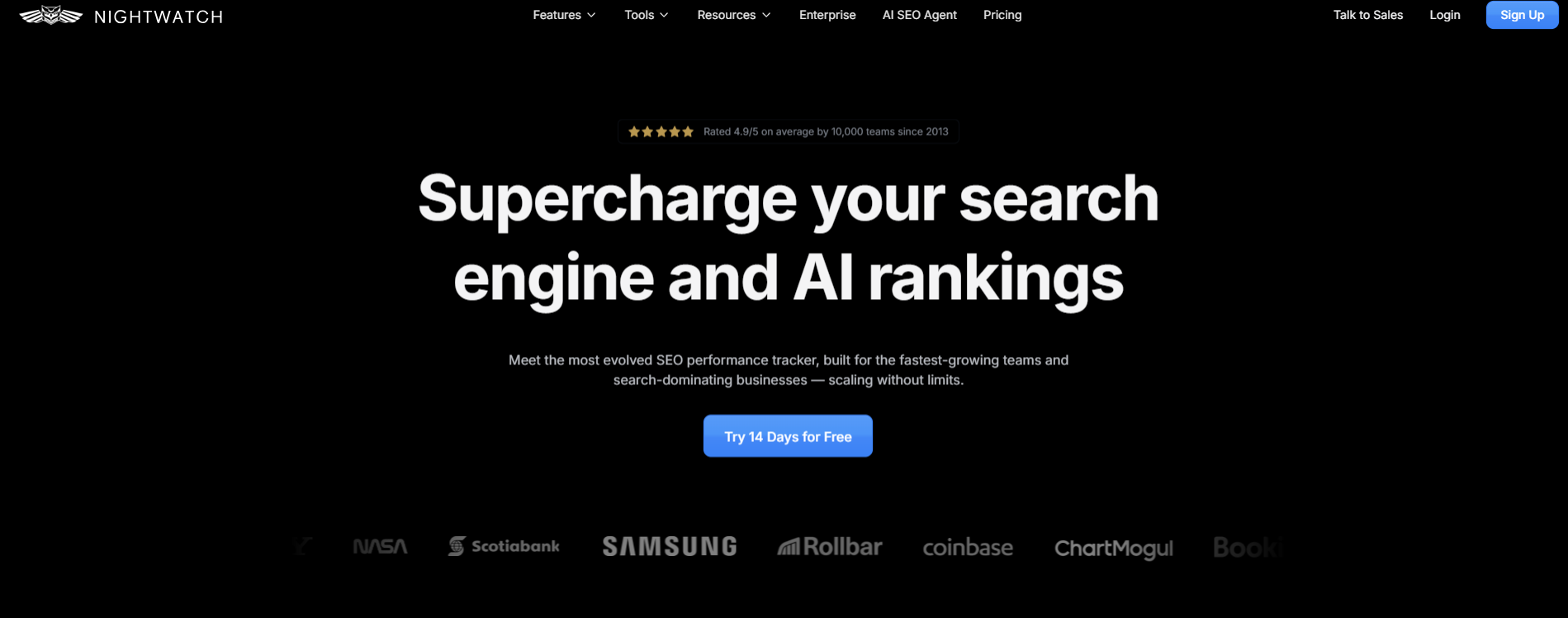
Nightwatch stands out as the most versatile AI tracking and brand monitoring platform available. What sets it apart from every other tool on this list is that it offers a complete monitoring solution: it tracks LLM responses, the searches those LLMs execute for up-to-date answers, prompt-level performance, and citation-level sentiment analysis powered by the Nightwatch SEO Agent.
What it does
While most AI tracking tools only monitor how your brand appears in AI-generated text, Nightwatch also tracks the real-time web searches that AI models perform to gather current information. This dual-layer tracking gives you visibility into the full pipeline: from the search queries AI systems run, to the sources they pull from, to how your brand ultimately appears in the final response.
The platform uniquely combines LLM monitoring, search engine tracking for AI lookups, prompt research, and citation-level sentiment analysis in a single dashboard. You also get traditional SEO rank tracking, so you’re looking at classical rankings and AI visibility side by side—something none of the other tools here offer with the same depth.
Nightwatch tracks your brand across major AI-powered search engines including Google AI Overviews, ChatGPT, Claude, and Perplexity. The tool gives you real-time monitoring of brand mentions, tracks competitor visibility across AI search platforms, and provides historical data analysis so you can see trends over time.
Pricing
Nightwatch’s pricing starts at $32 monthly with a 14-day free trial—significantly more affordable than enterprise-only alternatives that charge $499/month or more for narrower feature sets. Custom quotes are available for larger deployments.
Best for
SEO teams and agencies that need a complete view of both AI and traditional search visibility. If you want LLM monitoring, prompt research, search engine tracking, and citation-level sentiment analysis in one platform without paying enterprise prices, Nightwatch is the clear choice.
Pros
- The only tool that tracks both LLM responses and the searches AI systems perform for real-time data
- Combines LLM monitoring, search engine tracking, prompt research, and citation-level sentiment analysis with traditional SEO rank tracking
- Affordable pricing compared to enterprise-only alternatives
- Offers additional SEO tools including keyword research, site audits, local rank tracking, and an SEO AI agent for automating complex SEO tasks
- Strong historical data tracking shows you trends, not just snapshots
Cons
- Slight learning curve for new users due to the breadth of features
Nightwatch is the best option if you want comprehensive AI and SEO monitoring without paying enterprise prices or juggling multiple tools.
Otterly AI
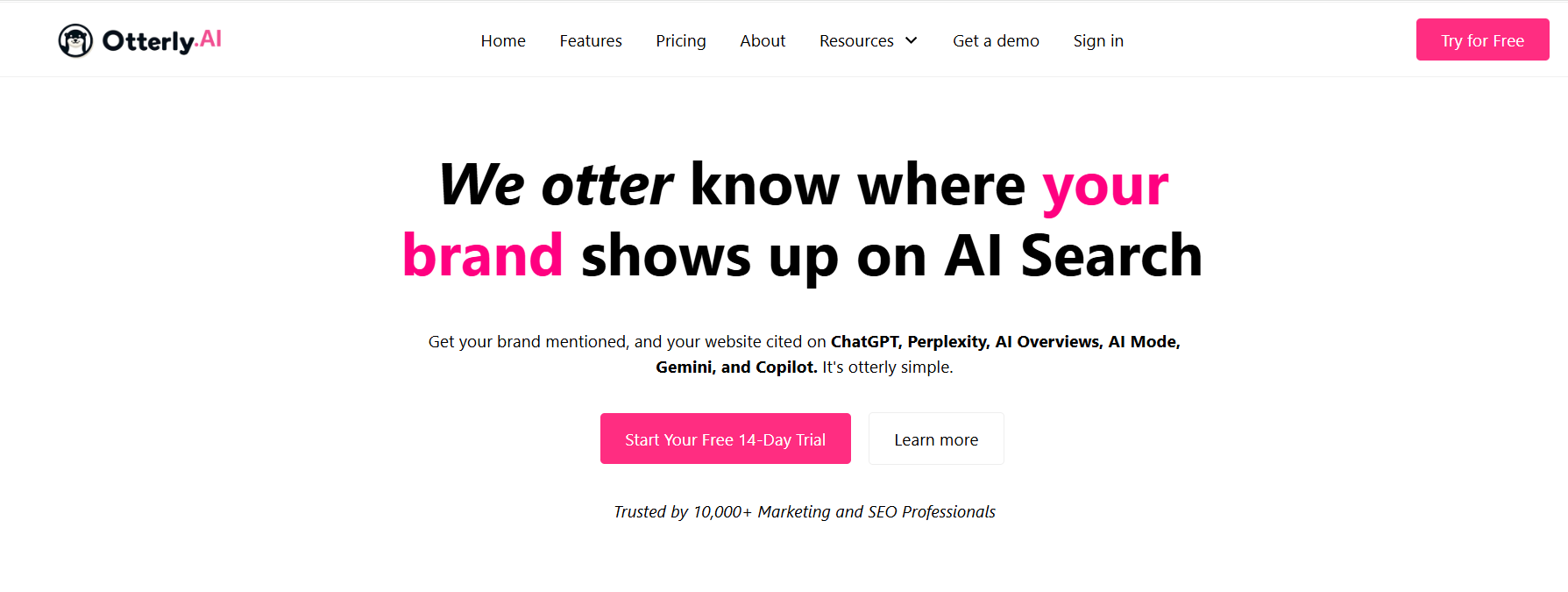
Otterly AI has become the go-to AI search monitoring tool for a lot of marketing teams, and after using it for several months, I get why.
What it does
Otterly tracks your brand across Google AI Overviews, ChatGPT, Perplexity, AI Mode, Gemini, and Claude, basically every AI search engine that matters right now. The coverage is comprehensive, which matters because you don’t want blind spots when someone’s asking about your category in Perplexity while you’re only monitoring ChatGPT.
The platform does citation tracking (both linked and unlinked mentions), competitive benchmarking, and real-time monitoring with alerts when your visibility changes. One feature I found helpful was their “Share of AI Voice” metric, which shows you what percentage of relevant AI responses mention your brand versus competitors. It’s a clean way to measure market share in the AI search ecosystem.
Pricing
Starts at $29/month, which is affordable compared to enterprise options. They offer a free trial so you can test it before committing.
Best for
Brand marketing professionals, in-house teams, and agencies that need solid AI search visibility tracking.
Pros
- User-friendly interface that doesn’t require training to understand
- Broad platform coverage across all major AI-powered search engines
- Affordable entry point with actionable insights from day one
Cons
- There’s a learning curve for some of the advanced features if you want to dig deep into sentiment and keyword analysis
- Reporting could be more customizable for agencies presenting to clients
Knowatoa AI
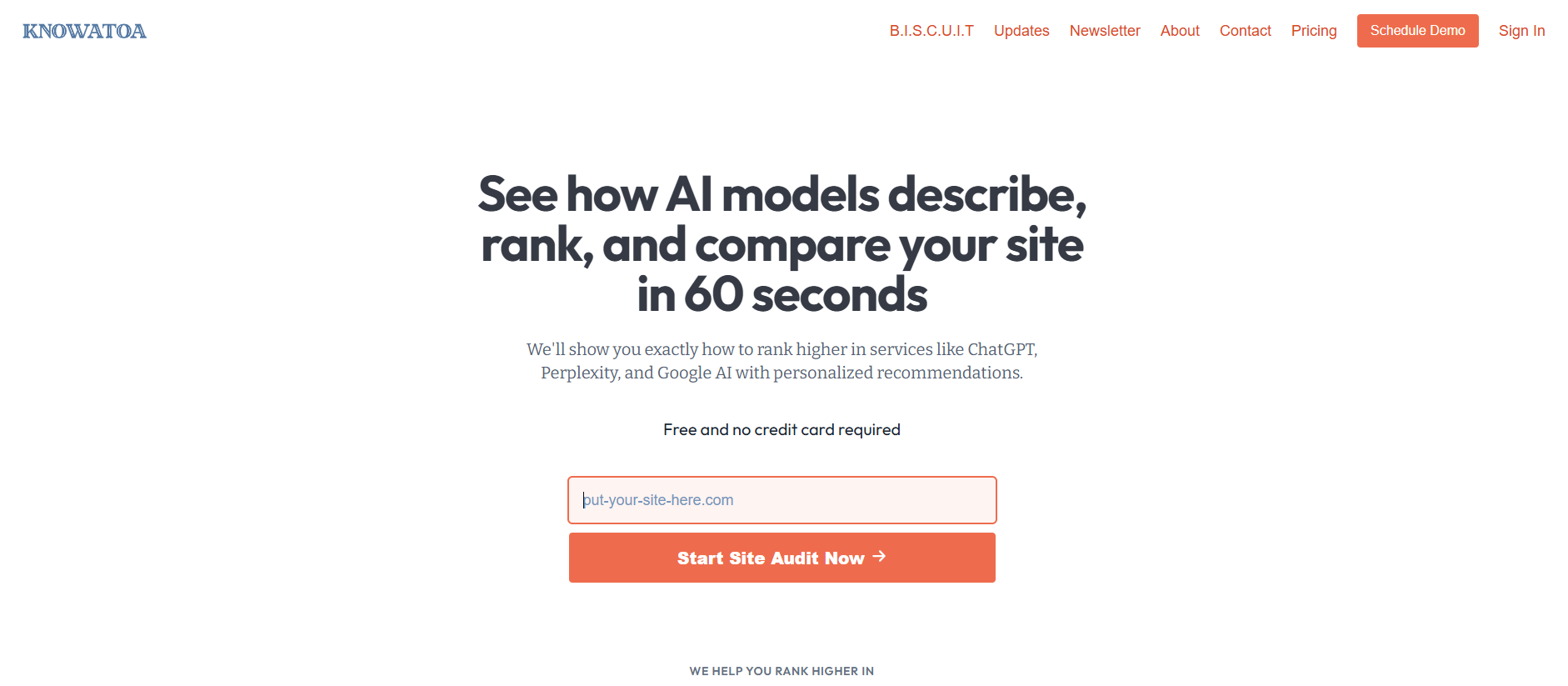
Knowatoa came out of nowhere in 2026 and quickly built a reputation for one thing: understanding how AI actually talks about your brand. If you care more about sentiment and brand perception than raw mention counts, this is the tool to look at.
What it does
Knowatoa monitors ChatGPT, Claude, Perplexity, Gemini, and Google AI Overviews, but what sets it apart is the depth of sentiment and keyword analysis. The platform uses something they call the “BISCUIT Framework” for understanding AI rankings. Honestly, the acronym feels a bit marketing-y, but the underlying analysis is solid.
You get detailed breakdowns of how AI describes your brand, what keywords and phrases appear alongside your mentions, and whether the sentiment is positive, neutral, or negative. This matters more than you’d think. I’ve seen cases where a brand gets mentioned frequently in AI responses, but always in a “cheaper alternative” context. Raw mention tracking would show success, but sentiment analysis reveals the problem.
Competitor benchmarking is built in, so you can see how AI positions you relative to competitors in the same responses.
Pricing
7-day free trial available with limited prompts and monitoring frequency. Paid plans scale based on how many prompts you want to track and how often you need updates, starting at $59 monthly.
Best for
Agencies and in-house teams focused on brand perception and positioning. If your goal is understanding how AI talks about you rather than just if it does, Knowatoa delivers.
Pros
- Strong sentiment analysis that goes beyond basic positive/negative classification
- Affordable entry point with a free tier to test the platform
- Good for understanding brand positioning in AI responses
Cons
- Newer tool with limited user reviews, so you’re taking a bit of a risk on long-term support
- Interface isn’t as polished as Otterly or Nightwatch
- Less focused on citation analysis and link tracking compared to competitors
- Might require you to pair with another tool for tracking raw visibility
Profound AI
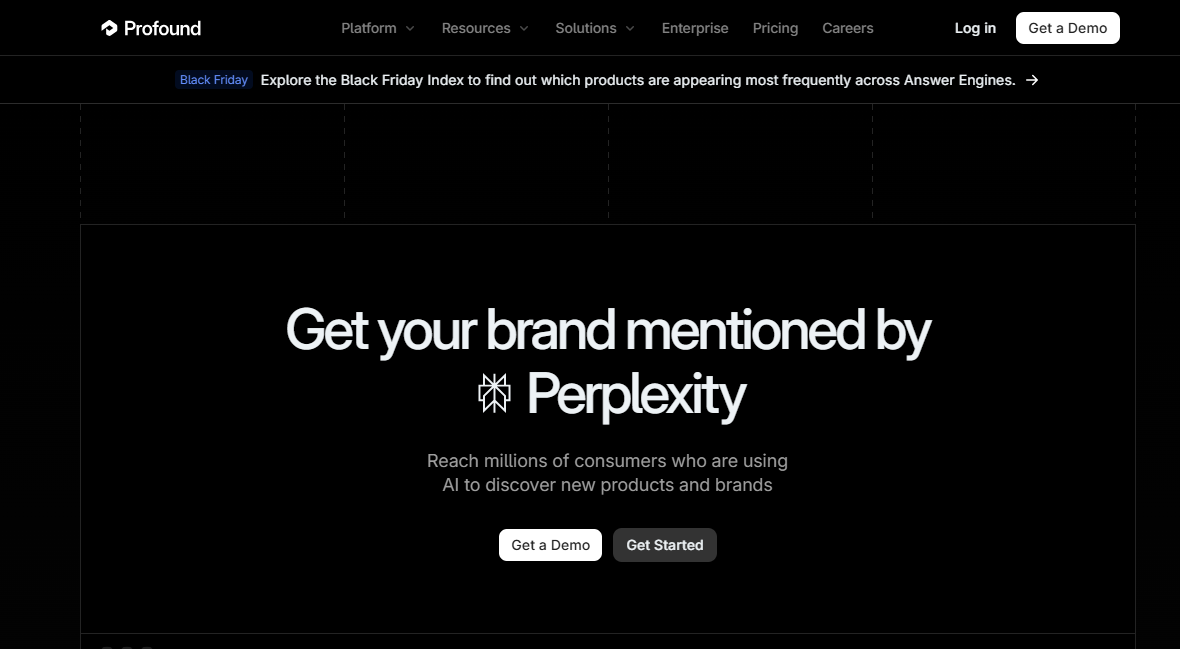
Profound AI is an enterprise-focused tool that tracks how your brand appears in AI-generated responses. However, it focuses exclusively on LLM tracking and lacks several capabilities that other platforms offer.
What it does
The platform gives you what they call “Answer Engine Insights,” which tracks your brand across AI-powered search engines. They use synthetic personas to simulate different buyer journeys and see how AI responds to queries at various stages.
However, Profound AI does not monitor the search engines that AI systems query when gathering real-time information. It also lacks prompt research capabilities to show how specific queries surface your brand versus competitors, and does not offer citation- or source-level sentiment analysis. This means you’re getting a partial view of AI visibility without understanding the full pipeline of how AI discovers and uses your content.
For businesses that need a complete picture of their online visibility across both AI responses and traditional search, these gaps require supplementing Profound with additional tools.
Pricing
Pricing starts at $99/month for just 50 prompts and ChatGPT tracking only. To track multiple AI engines, you’ll need custom enterprise pricing that can run into thousands of dollars monthly. There’s no self-service option—you’re going through a sales process and likely signing an annual contract. The pricing is high relative to the feature coverage compared to alternatives that include search engine tracking and prompt research.
Best for
Large enterprises with substantial budgets that only need basic LLM mention tracking and don’t require search engine monitoring, prompt research, or citation-level sentiment analysis.
Pros
- Synthetic personas for simulating buyer journeys
- Event impact analysis for tracking visibility changes
Cons
- No search engine tracking—you can’t monitor Google, Bing, or other sources AI systems use for real-time data
- No prompt research to show how queries surface your brand versus competitors
- No citation- or source-level sentiment analysis
- Expensive pricing starts at $99/month for limited features, with enterprise plans costing thousands
- No self-service option means you can’t just sign up and start
- Limited value for teams that need both AI and SEO tracking in one platform
Peec AI
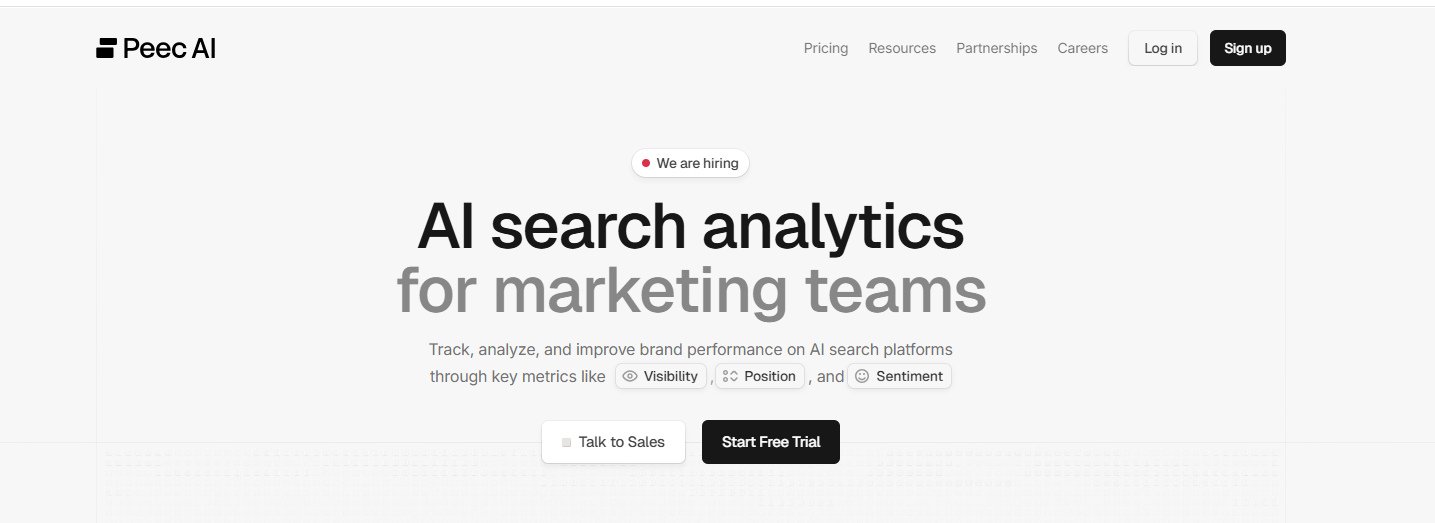
Peec AI is a newer tool that focuses on basic LLM visibility tracking. While it offers a simple interface, it lacks several capabilities that more comprehensive platforms provide.
What it does
Peec tracks brand visibility across AI search engines like ChatGPT, Perplexity, and Google AI Overviews. The platform shows whether AI mentions your brand and in what context.
However, Peec AI does not monitor the search engines that AI systems query when gathering real-time information—a critical gap since many AI responses are informed by live web searches. It also lacks prompt research capabilities to analyze how specific queries surface your brand versus competitors, and does not offer citation- or source-level sentiment analysis. Teams using Peec will need separate tools to understand the full picture of how AI discovers and references their content.
Pricing
Pricing starts at €89/month for just 25 prompts and three AI search engines. This is relatively expensive compared to alternatives that offer broader feature coverage including search engine tracking and prompt research at lower price points.
Best for
Teams that only need basic LLM mention tracking and are comfortable supplementing with separate tools for search engine monitoring and prompt research.
Pros
- Simple interface
- Unlimited team seats
Cons
- No search engine tracking—you can’t monitor Google, Bing, or other sources AI systems use for real-time data
- No prompt research to analyze how queries surface your brand versus competitors
- No citation- or source-level sentiment analysis
- Pricing is high relative to the limited feature set (€89/month for just 25 prompts)
- No free trial to test before committing
- Newer tool with limited user feedback and community support
- Not useful for early-stage brands that AI rarely mentions
Frequently Asked Questions
What’s the difference between AI search monitoring and traditional SEO tools?
Traditional SEO tools like Search Console track where you rank for specific keywords in search engine results pages, your organic traffic, and click-through rates. AI search monitoring tools track whether your brand gets mentioned in conversational AI responses from ChatGPT, Perplexity, Google AI Overviews, and other AI-powered search engines. There are no rankings in AI responses, just mentions or silence. The focus shifts from keyword-based searches to conversational queries, where the key question is whether AI recommends you at all, not where you rank.
How much do AI search monitoring tools cost?
The range runs from $29 to several thousands per month, depending on features and scale. Nightwatch starts at $32/month and offers the most complete feature set—combining LLM monitoring, search engine tracking, prompt research, and citation-level sentiment analysis with traditional SEO rank tracking. Tools like Peec AI start at €89/month but only offer basic LLM visibility without search engine tracking, prompt research, or citation-level sentiment analysis. Enterprise-focused options like Profound AI start at $99/month for limited features and can run into thousands monthly, yet still lack search engine monitoring and prompt research capabilities
Which AI platforms should I monitor?
At minimum, monitor ChatGPT, Google AI Overviews, and Perplexity. These three dominate the conversational AI search landscape and affect buying decisions the most. Beyond those essentials, track Gemini, Claude, and AI Mode if you have the budget and capacity. Emerging platforms like Grok, DeepSeek, and Llama are worth watching, but not critical yet unless your specific audience heavily uses them. Most AI search monitoring tools automatically cover the major platforms, so your choice of tool often determines which AI-powered search engines you’re tracking.
Take Control of Your AI Search Visibility Today
AI search has fundamentally changed how buyers find and evaluate products. ChatGPT, Perplexity, and Google AI Overviews are answering questions that used to drive traffic to your website, and if you’re not monitoring your brand visibility in these AI responses, you’re flying blind.
The tools I’ve covered vary significantly in their capabilities and value. Some, like Peec AI and Profound AI, offer only basic LLM visibility tracking without search engine monitoring, prompt research, or citation-level sentiment analysis—and charge premium prices for these limited features. Others provide more comprehensive coverage.
For teams that need a complete view of AI visibility, Nightwatch is the clear choice. It’s the only platform that combines LLM monitoring, the searches AI systems execute for real-time answers, prompt research, and citation-level sentiment analysis alongside traditional SEO rank tracking—all starting at $32/month. You get the full picture of your search visibility without juggling multiple tools or paying enterprise prices.
Try Nightwatch free for 14 days and see where your brand stands across both AI and traditional search.